Health & Safety Policy — Commercial Waste Slough
 This Health and Safety policy sets out the clear commitment of Commercial Waste Slough to protect the health, safety and welfare of employees, contractors and members of the public affected by our commercial waste operations. The policy covers our commercial rubbish collection, refuse transfer and related site activities and explains how we identify, control and reduce risk. Our objectives include preventing injury and ill health, ensuring safe systems of work, protecting the environment and maintaining business continuity. We will apply proportionate measures to control hazards and promote a positive safety culture across the organisation.
Senior management are responsible for establishing and resourcing this policy, setting expectations and providing the leadership needed to embed safe working. Supervisors and team leaders are accountable for implementing safe systems of work, monitoring performance and coaching staff. Employees must follow instructions, use issued safety equipment and report hazards or unsafe acts immediately. Safety representatives and appointed first aiders support implementation on site. The policy also promotes staff wellbeing, record keeping of training and competency, and proportionate disciplinary measures where unsafe behaviours persist.
 Risk assessments are carried out for all tasks including vehicle manoeuvres, manual handling, compacting operations and working near public access ways. Identified hazards include lifting and handling injuries, vehicle collisions, slips, trips and falls, sharps and biohazards, and exposure to hazardous substances. Controls are applied using the hierarchy of controls: eliminate, substitute, engineer, isolate, administrate and provide personal protective equipment. Controls such as mechanical lifting aids, route planning, effective signage, adequate lighting and safe storage are documented, implemented and reviewed on a scheduled basis to ensure continuing effectiveness.
Key Safety Principles
Training and competence are central to safe waste collection operations. All staff undertake induction training covering safe work practices, manual handling, hazardous waste segregation and emergency response. Ongoing training takes the form of toolbox talks, accredited courses, practical demonstrations and recorded refresher sessions to maintain skills relevant to a rubbish company workforce. The business provides appropriate personal protective equipment including gloves, high-visibility clothing, safety boots and eye protection; the correct use and maintenance of PPE is mandatory and monitored as part of routine supervision.
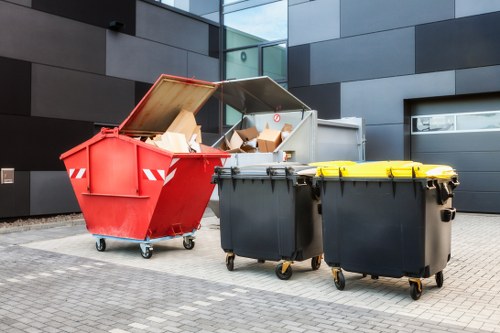
 Vehicles and plant used in waste collection and transfer are operated and maintained to safe standards. Pre-shift vehicle checks, load securement procedures, reversing protocols and restrictions on unauthorised use of lifting equipment reduce the potential for incidents. Drivers and operators receive role-specific training; licence and medical checks are recorded and periodically reviewed. Telematics, speed management and maintenance logs support safe fleet operation. Safe working in confined or busy urban spaces is addressed through risk controls, competent supervision and clear communication.
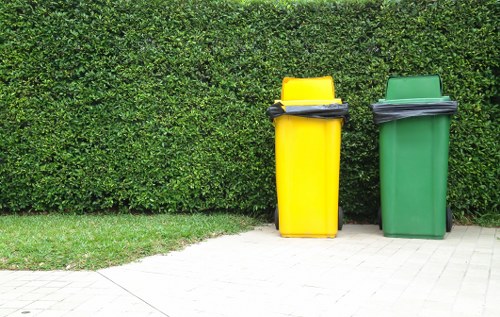
Waste segregation and handling procedures are designed to prevent contamination, protect operatives and ensure regulatory obligations are met. Clearly labelled containers, colour-coded streams and secure storage reduce cross-contamination between general refuse, recyclable materials and controlled wastes. Suspected hazardous or chemical wastes are isolated and managed only by trained personnel with appropriate containment measures. Spill kits, absorbents and containment procedures are available and staff are trained to respond to accidental releases in a way that protects people and the environment.
Implementation and Review
 Emergency preparedness and response arrangements are maintained and tested. Clear procedures exist for spill response, fire incidents, serious injury, extrication from plant and first aid events. Emergency equipment is accessible and staff know the location and correct use of spill kits, fire extinguishers and first aid supplies. Regular emergency drills and scenario-based exercises help to ensure that personnel are capable of responding effectively. Liaison arrangements with external emergency services and internal incident command roles are defined so that escalation and communication are prompt and coordinated.
Monitoring, inspections and incident reporting support continual improvement. Routine site inspections and vehicle checks identify hazards and non-conformances that are recorded and tracked. All incidents, near misses and health concerns are reported and investigated proportionately to identify root causes and corrective actions. Performance is measured using agreed safety indicators; results are reviewed by management and shared with teams. The organisation promotes an open reporting culture where concerns are raised without fear, learning is shared and improvements are embedded as part of everyday activities. Continuous improvement drives the update of procedures and training.
 Contractors and suppliers are required to meet the same safety expectations as the company. Prequalification checks, task-specific briefings and documented safe systems of work are used to manage third-party risks. Non-compliance is addressed through corrective actions and, where necessary, removal of unsafe contractors from site. Implementation of this policy depends on leadership commitment, competent staff and robust systems. The policy is communicated to employees and relevant stakeholders, enforced consistently and reviewed regularly to reflect operational changes and best practice in commercial waste collection and removal services.
